[AI-Coding] Everyone Can Have Their Own Toolbox Site
By now, everyone knows that subscriptions are getting expensive. Paying for a dozen different sites is a drain, and you're always worried they might just disappear.
Whether you want AI-generated images, automated text processing, receipt-to-spreadsheet conversion, specific formatting for work tasks, or on-the-fly investment return calculations—
It’s an uphill battle to find a tool for every tiny, personalized function. You’re constantly searching: Is there a tool for this? How much is it? Even if you only need one specific feature, you're usually stuck with a subscription.
In reality, what used to take weeks of coding can now be written by AI in no time. Anyone can build their own custom toolbox site.
This is based on two points:
- With free AI, building simple, functional web pages is currently a breeze.
- If you need specific data—like maps or product prices—you only need a very basic understanding of programming.
The bottom line is that AI has drastically lowered the barrier to entry for simple coding. You just need to learn how to communicate with it.
Based on my own experience, here are a few tools I’ve built myself.
1. [Project 1] Niche Market Demand Miner
This is the output: a spreadsheet of demand-mining results that I did NOT process manually. (If you spot a hidden gem of a niche in the image that's worth pursuing, congratulations. I’ve actually thought about selling this data, since I’ve already vetted it myself.)
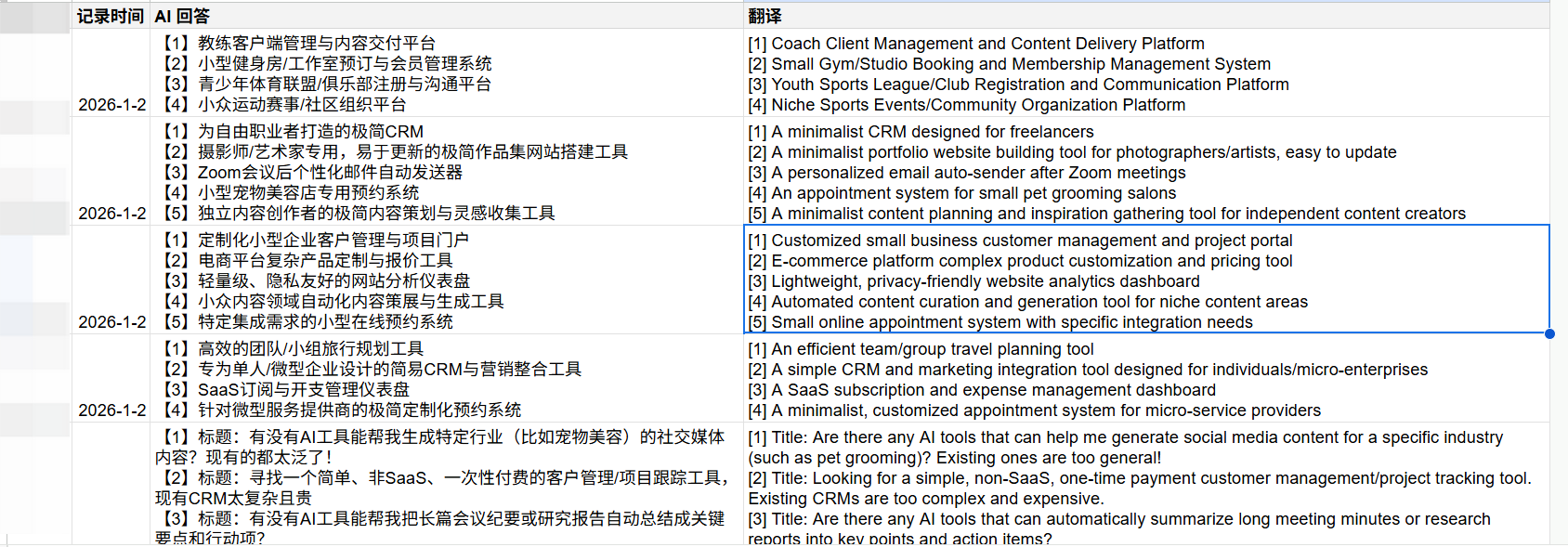
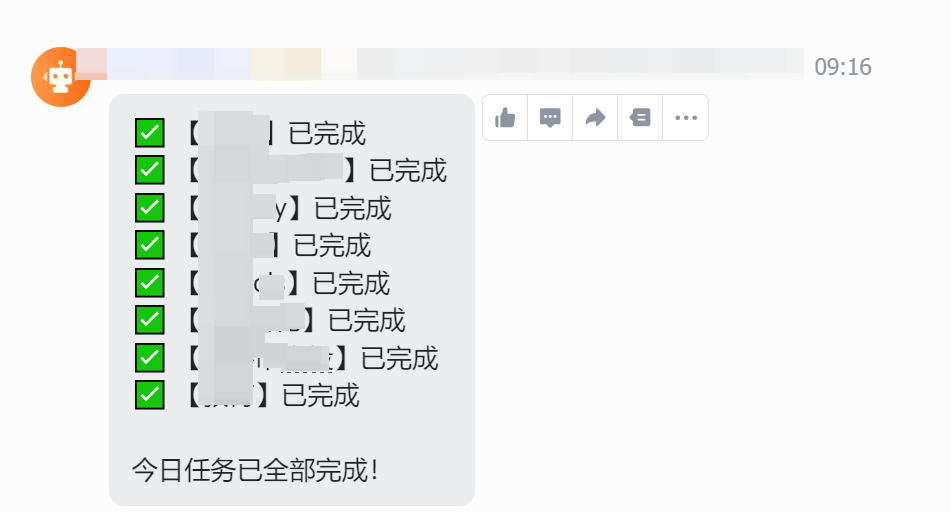
It runs on an AI combined with a scheduled task. Every day, I get a notification on Lark when the task is done. If I were to do this manually, I’d have to scan about 200 posts across 30+ subreddits in just a few minutes—just to find out what people are actually talking about in those specific communities. I’ve seen similar tools on Reddit before, but they were honestly terrible. They just scraped keywords, even if they used AI to do it.
Each title comes with a detailed breakdown of the content where that demand originated, making it easy to track back.
Keep in mind:
a. There are a lot of "shills" on Reddit—people pretending to be regular users while actually pushing their own products.
b. Monitoring keywords isn't enough; comments often hold the real value. Besides, even after scraping keywords, a human still has to manually organize everything.
So:
The real competitive edge, in my opinion, lies in the design of the [Mining Prompts] and the [Mining Workflow]. If we just have AI monitor a few keywords in certain subreddits, the result is that a human still has to do the analysis. Once you lose the context, you're lost. (I tried that for a while, and I hate just looking at keywords). Plus, a keyword doesn't always equal actual demand.
2. [Project 2] Semi-Automated Pain Point Research Tool
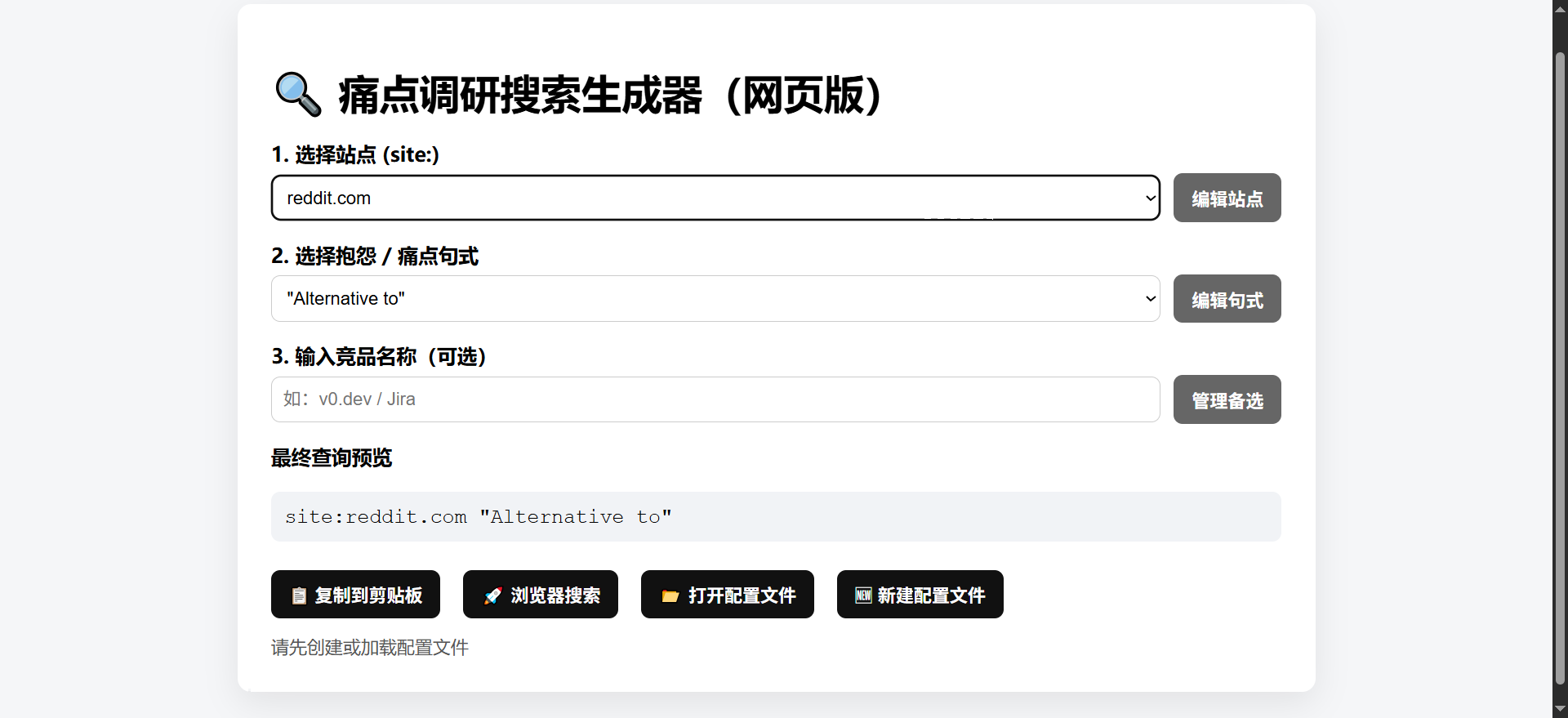
In reality, this is the semi-automated precursor to [Project 1]. Since I was searching with the same patterns every time, I realized I shouldn't have to memorize all those search strings. After chatting with an AI for a bit, I built this. It lets me select the Google domain and the competitors I want to track, then triggers the search results with one click.
Actually, it took longer to write out the requirements for this site than it did for the AI to generate it.
If we can save 5 minutes on every step of our workflow, we might actually get a good night's sleep.
Summary:
Here is how I see the difference between [Project 1] and [Project 2].
- [Project 1] requires automatic AI calls and a scheduled task; [Project 2] is a manual "click-to-use" tool.
- [Project 1] handles a massive amount of work automatically; [Project 2] still requires a human to do the heavy lifting.
- [Project 1] has a higher barrier to entry for those who don't understand "code frameworks" (note: not code itself); [Project 2] is much more accessible.
In Reality
For people who have never touched or experienced programming, this might look intimidating. Jargon makes things hard to understand.
But we can simplify it. Think of it like being a student:
[Frontend] = The part of the webpage you see ≈ Your eyes/vision
[Backend] = The part where the webpage "thinks" ≈ Your brain’s thinking process
[Database] = The part where the webpage remembers things ≈ Your brain’s memory area
[API] = The tools the webpage uses ≈ Borrowing your classmate’s notebook (^-^)
So, if we look at it broadly: the [Frontend] sends information to the [Backend], the [Backend] calls an [API] to process the result, saves it to the [Database], and returns it to the [Frontend].
It becomes: The content [you see] is transmitted through your eyes to [your brain’s thinking area]. After thinking, you "borrow" from a classmate’s notebook, solve the problem, store it in your memory, and then write it out so [you see] it yourself.
The knowledge framework for every field exists. Once someone builds "framework-level" knowledge in their own field, it’s actually very easy to migrate that framework. At that point, AI can help you bridge the gap in a completely different field.
This is exactly how I—a non-programmer—was able to complete [Project 1].
I just needed to know that [Frontend], [Backend], [Database], and [API] existed. I understood roughly what they were for.
Then, I had to clearly tell the AI what I needed to do and piece together the results it gave me according to that framework.
3. [Project 3] Prompt Manager
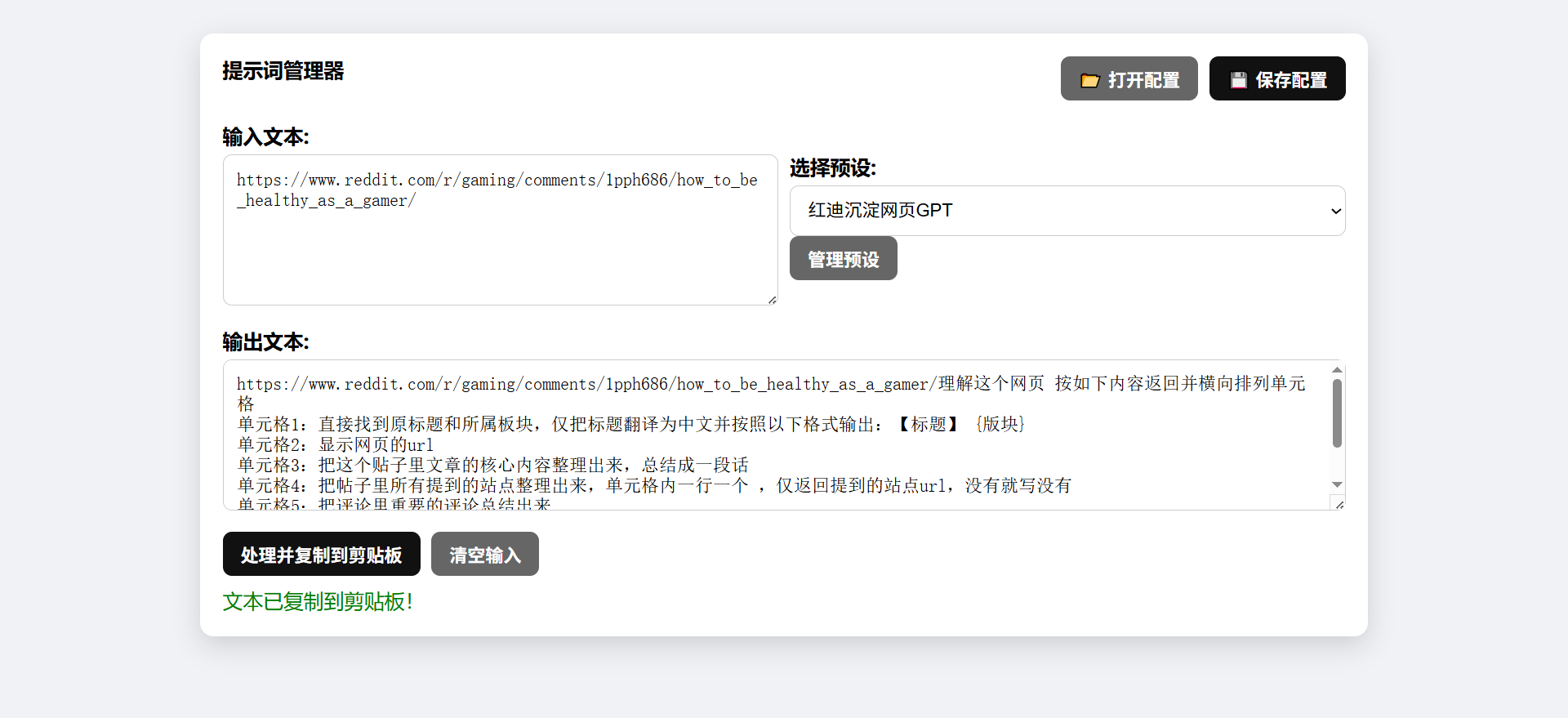
This tool is much simpler.
We talk to AI every day. Aside from casual chatting, work tasks usually follow a common format.
By using just a little [variable] + fixed text, I can instantly output a prompt. Plus, it processes the results exactly the way you want.
All in All
- As AI evolves, it won't just integrate into workflows—it will allow everyone to have an AI tool perfectly tailored to themselves.
- Building an AI tool isn't hard; the hard part is mapping out the workflow.
- Framework knowledge is highly transferable, though I can't cover it all here due to space constraints.
- We are all trying to make AI more human-like; but can humans even make themselves understood by others? Beyond improving AI’s comprehension, learning how to correctly express your own ideas is just as important.